
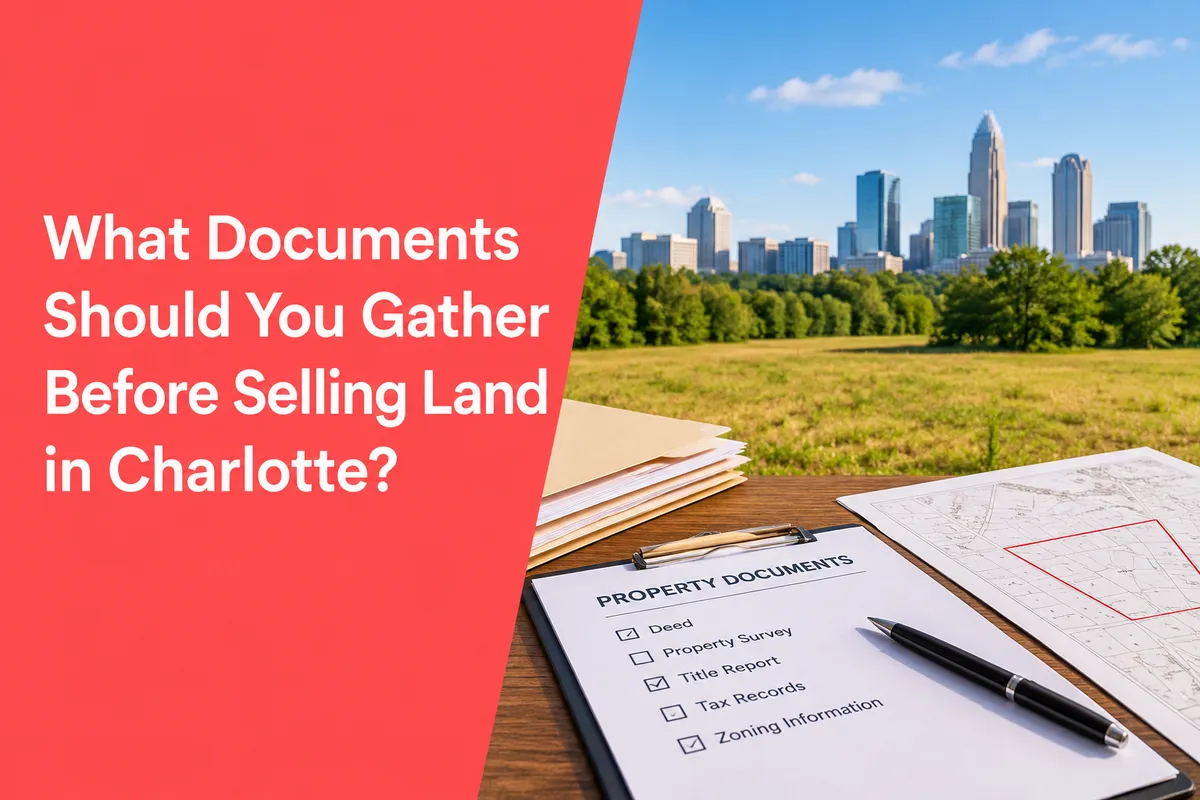
What Documents Should You Gather Before Selling Land in Charlotte?
Selling vacant land in Charlotte requires a different kind of preparation than selling a house. There may be no building to inspect or interior to stage, but buyers still need reliable information about ownership, property boundaries, access, zoning, taxes, and permitted uses. Having the right documents ready can help make the transaction easier to understand and reduce avoidable delays.
For landowners preparing to sell, the first step is to organize the records that explain what you own and what a future buyer may be able to do with the property. Carey Finn Group can help landowners understand the real estate selling process and prepare for conversations with prospective buyers throughout Charlotte and surrounding communities.
Start With Proof of Ownership
The most important document to locate is the deed. It identifies the property and records the legal transfer of ownership. Buyers and closing professionals may use it to compare the seller's information with public records.
If you inherited the land, received it through a family transfer, or acquired it through another arrangement, additional paperwork may be necessary to establish the current ownership clearly. If more than one person owns the property, confirm who must participate in the sale.
Useful ownership records may include:
The current deed or recorded ownership instrument
Previous deeds, if needed to clarify the ownership history
Estate or trust documents, when applicable
Written authorization or other documentation if someone is acting on an owner's behalf
A deed alone does not necessarily resolve every ownership issue. If names differ across records or ownership is disputed, consult a qualified North Carolina real estate attorney before proceeding.
Find the Property Survey and Boundary Information
Land boundaries are important because the buyer needs to understand the area being purchased. A recent survey, when available, can help show the parcel's dimensions, boundary lines, and certain physical features.
Look through your closing papers, property files, or records from when you originally purchased the land. If you cannot find a survey, ask a qualified land surveyor whether a new survey would be useful.
Keep in mind that a survey and a tax parcel map serve different purposes. A tax map can help identify a parcel, but it should not automatically be treated as a definitive survey of the property's boundaries.
Collect Tax Records and Property Identification Details
Buyers and closing professionals need to identify the correct parcel and review the property's tax information. Gather the property's tax bill, parcel identification number, and any available tax payment records.
In Mecklenburg County, landowners can use county property in Cornelius and tax records to help verify parcel details and review assessment information. Make sure the information you provide relates to the correct tract, especially if you own multiple neighboring parcels.
Organize the following:
Recent property tax bills
Parcel identification number
Available tax payment records
Property assessment information, if relevant
Property tax assessments are not the same as a professional market valuation. They can provide useful background, but the land's location, access, restrictions, and potential uses also matter when evaluating a possible asking price.
Understand Zoning Before Marketing the Property
Zoning can influence how buyers evaluate a parcel. A buyer considering land for a home, a commercial project, or another permitted purpose will want to understand the applicable rules and restrictions.
Charlotte's zoning requirements and land-use information can be relevant to properties within the city. However, the correct regulations depend on the parcel's location and jurisdiction. Land elsewhere in the greater Charlotte region may fall under different local planning and zoning authorities.
Do not assume that vacant land can automatically be subdivided, developed, or used for a particular business. A property's zoning designation is only one part of determining what may be possible. Setbacks, access, utilities, environmental conditions, and other requirements may also affect a proposed project.
Document Road Access and Any Easements
Access can significantly affect a buyer's understanding of a land parcel. Some properties connect directly to a public road, while others rely on a recorded access easement or private road arrangement.
Gather any recorded easements, road maintenance agreements, or other documents that explain how the property is accessed. If a neighboring owner has a legal right to cross the land, or if your parcel depends on access across another property, make sure the relevant records are available.
This information can be especially important when evaluating land outside Charlotte's more established street network, including parcels around Huntersville, Davidson, or other nearby communities.
If access rights are unclear, avoid making assumptions in the listing description. A real estate attorney or other appropriate professional can help clarify what the recorded documents establish.
Bring Together Utility and Site Information
Vacant land may or may not have access to public water, sewer, electricity, or other services. Buyers often need to understand the current situation before deciding whether the property fits their plans.
For properties in Harrisburg or Concord, for example, the appropriate utility provider and local authority will depend on the parcel's exact location. Service availability should be verified rather than assumed based on nearby homes or development.
If you have no documentation confirming a service connection, describe the information as unknown until it has been checked. A utility line nearby does not necessarily mean that a connection is available or approved for the property.
Check for Restrictions and Environmental Records
Recorded restrictions can affect how land is used. These may include restrictive covenants, easements, conservation requirements, or other recorded interests. Gather any documents you received when acquiring the parcel, along with records of agreements that may still apply.
Charlotte-area parcels can differ substantially in topography, drainage, surrounding development, and site conditions. Do not assume that a property is free from environmental or development limitations simply because it is vacant.
Existing reports can help buyers identify what has already been evaluated, but their age, scope, and applicability should be checked. If a report raises concerns, seek guidance from a qualified professional before making representations about the land.
Prepare a Clear File for the Closing Process
Once you have gathered the main records, arrange them in a simple digital or paper file. Use separate sections for ownership, boundaries, taxes, zoning, access, utilities, restrictions, and site studies.
You do not need to have every possible report before beginning a conversation about selling. However, knowing what is available and what remains unverified makes it easier to respond accurately to buyer questions.
The closing professional may request additional documents based on the ownership structure and transaction. Depending on the circumstances, this could include identification, payoff information for a lien, entity authorization, or other paperwork needed to complete the transfer.
Avoid sharing sensitive personal information unnecessarily. Provide documents through an appropriate, secure process when requested by the closing attorney or other authorized professional.
How Carey Finn Group Can Help Landowners Prepare
Preparing to sell land is about more than collecting paperwork. Owners also need to understand how the property's location, documented features, and potential buyer interests may affect the marketing process.
Carey Finn Group works across Charlotte and nearby communities, including Davidson and Cornelius, as well as Concord, Harrisburg, and Huntersville. Understanding the location of a parcel is an important starting point because local jurisdiction, surrounding land uses, road access, and available services can differ from one property to another.
A Top Real Estate Broker should help explain the process without promising a particular sale price or outcome before the property's circumstances have been assessed.
Final Checklist Before You List
Before moving forward, review your file and confirm that you have located the current deed, available survey, parcel identification details, tax records, zoning information, access documents, utility records, and any existing restrictions or site reports.
Next, identify gaps that may need attention. You might need to request a missing record, confirm the correct planning jurisdiction, or seek professional advice about an ownership or access question. Resolving uncertainties early can help prevent confusion later in the transaction.
Selling land in Charlotte can be more straightforward when the paperwork is organized and the property's known features are described accurately. You do not need to know every answer immediately; you do need to distinguish verified facts from details that still require confirmation.
With a well-organized document file and appropriate professional guidance, landowners can approach the next stage of the sale with greater clarity and confidence.
Frequently Asked Questions
What is the most important document when selling land in Charlotte?
The current deed is a key starting point because it helps establish recorded ownership. Other documents may also be necessary before closing.
Do I need a survey to sell vacant land?
Not in every situation, but an existing survey can help clarify boundaries. A buyer, lender, or closing professional may request additional surveying.
Where can I find property tax records in Mecklenburg County?
You can check Mecklenburg County's official property and tax record resources using the parcel's identification details or property address, where available.
Should I verify zoning before listing my land?
Yes. Confirm the applicable zoning and jurisdiction before advertising a specific development or land use.
What if I cannot find all my land documents?
Start with the deed, tax records, and any previous closing paperwork. Contact the relevant county office, surveyor, utility provider, or attorney for records or guidance as needed.