
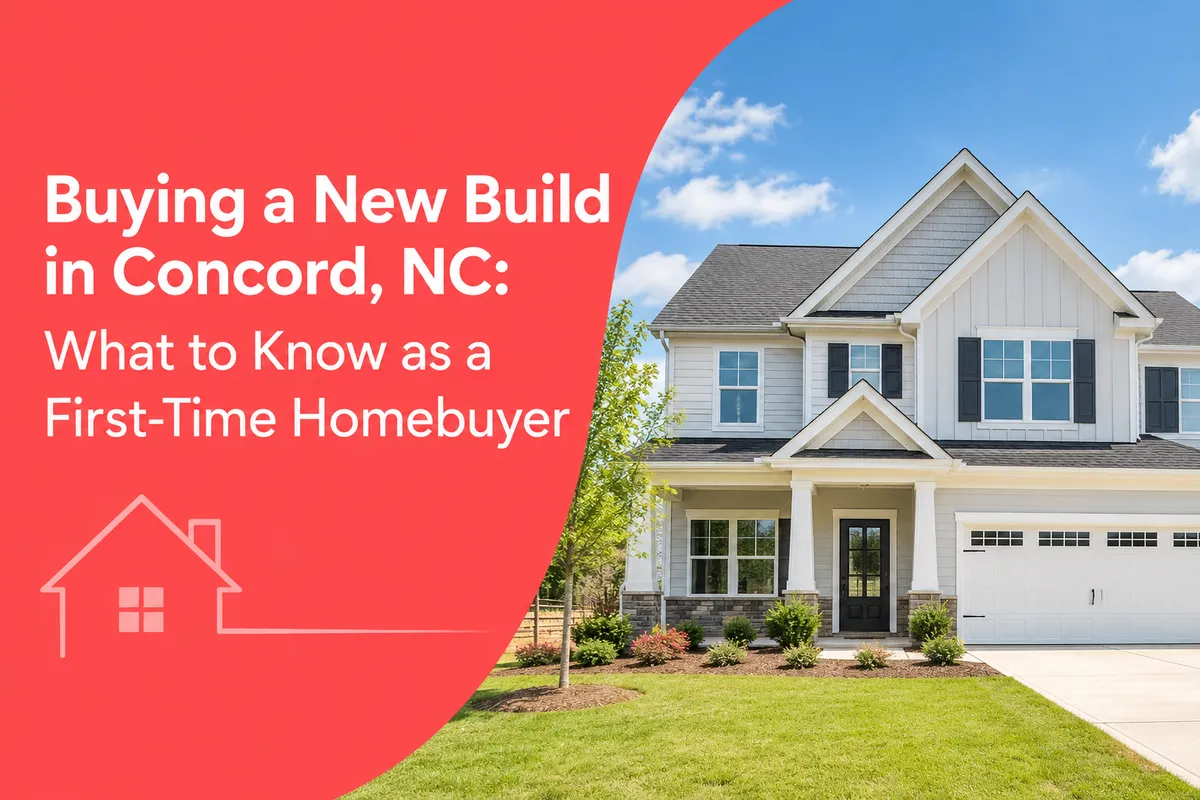
Buying a New Build in Concord, NC: What to Know as a First-Time Homebuyer
Buying your first home is a major decision, and a new construction home in Concord, NC can make the experience feel very different from purchasing an existing property. Instead of simply walking through a finished home and making an offer, you may be choosing a homesite, floor plan, finishes, upgrades, and sometimes even the stage of construction.
That difference is important.
For first-time buyers, the excitement of a brand-new kitchen, unused appliances, modern layouts, and a fresh home can make it easy to focus on what looks attractive today. The better approach is to understand what you are actually purchasing, what is included, what costs extra, and what needs to be checked before closing.
If you are considering Concord, working with a knowledgeable Real Estate Broker can help you evaluate the entire purchase rather than focusing only on the model home.
Start With the Homesite, Not Just the House
When people visit a new construction community, the model home often receives most of the attention. But the lot underneath and around the house can be just as important.
Look at the homesite carefully.
Consider its position within the community, the amount of usable outdoor space, neighboring homes, driveway placement, privacy, drainage, and how the property sits relative to surrounding streets.
In Concord, this is especially worth discussing because local rules address floodplain and finished-floor requirements for new construction. The City of Concord states that new construction within its jurisdiction must have a finished floor elevation at least two feet above the elevation of the nearest 100-year floodplain.
That does not mean every new home has a flood concern. It does mean a first-time buyer should understand the specific homesite rather than assuming every lot carries the same characteristics.
Know Exactly What the Base Price Includes
A model home is designed to show possibilities.
The home you purchase may have a different base specification.
Before signing anything, ask for a written breakdown of what is included. This can cover flooring, countertops, cabinets, lighting, appliances, bathroom finishes, landscaping, garage features, and other elements.
Then separate the standard features from optional upgrades.
A lower starting price can change considerably once you begin selecting upgraded finishes. First-time buyers should know their total budget before visiting the design center so that each upgrade can be evaluated against the overall purchase plan.
A useful question is:
“What will the home cost when everything I actually want is included?”
That number is more useful than the advertised starting price.
Decide How Much Customization You Really Need
New construction can offer choices that an existing home cannot.
You may be able to select certain finishes, colors, flooring, cabinets, fixtures, or structural options depending on the builder and construction stage.
But more choices are not automatically better.
Think about which features matter to your daily life. A practical floor plan may be more valuable than an expensive decorative upgrade. Storage, bedroom placement, workspace, natural light, garage configuration, and outdoor usability can affect how comfortable the home feels long after the excitement of closing has passed.
For a first-time buyer, prioritizing functional improvements can help keep the project within budget.
Understand the Construction Timeline
One of the biggest differences between buying an existing home and buying a home that is still being built is timing.
A new home can involve several stages before you receive the keys. The timeline can depend on the construction stage, inspections, materials, approvals, utilities, and other project-specific factors.
Do not make major moving plans based only on an early estimated completion date.
Ask the builder:
What stage is construction currently in?
What milestones remain?
When will inspections occur?
What happens if completion is delayed?
When can the buyer conduct a final walkthrough?
What documentation will be provided before closing?
Concord's development process involves city zoning review and county building permitting. The City explains that construction applications are reviewed by Concord for zoning while Cabarrus County handles building permits.
Understanding that process can help a first-time buyer appreciate why construction involves more steps than simply moving into a completed property.
Don't Skip Independent Inspections
A new home is new, but that does not mean a buyer should assume everything is perfect.
An independent inspection can provide another set of eyes on the property. Depending on the construction stage and purchase agreement, buyers may consider inspections at appropriate points during construction as well as a final inspection.
The purpose is not to assume something is wrong. It is to identify items that may need attention before ownership changes hands.
Your inspection process should be coordinated with the purchase agreement, builder requirements, and appropriate professionals.
Look Beyond the Interior
A new home can look impressive during a model-home tour, but first-time buyers should also examine the surroundings.
Pay attention to:
Street layout
Nearby homesites
Traffic patterns
Driveway access
Outdoor space
Community amenities
Utility arrangements
Future development information available through the appropriate local authorities
Huntersville is a large community with distinct areas and different residential settings. Downtown Concord, for example, is described by the city as the community's core, combining historic character with businesses, restaurants, arts, and entertainment.
That local context matters because choosing a new construction home is not only about the building. It is also about choosing where that building fits into your everyday life.
Calculate the Full Cost of Ownership
Your monthly housing cost is more than the principal and interest on a mortgage.
Before committing, account for applicable taxes, insurance, utilities, association costs if applicable, maintenance, and any additional expenses associated with the property.
New construction may reduce the likelihood of immediately replacing older components, but homeowners still need a budget for routine maintenance and unexpected expenses.
Also consider the cost of upgrades you want after moving in. A home can be brand new and still require spending on window treatments, furniture, landscaping additions, storage solutions, or other personal improvements.
Why a Real Estate Broker Can Help
A first-time homebuyer guide does not need to navigate the process alone.
A Best Real Estate Broker for your situation should help you understand the transaction, ask questions, review available information, and keep your priorities in focus.
Carey Finn can help buyers looking at Concord while also serving clients across Harrisburg, Charlotte, Davidson, Cornelius, and Huntersville.
The goal should be to understand the home before committing—not simply to fall in love with the model.
Final Thoughts for First-Time Buyers
A new construction home in Charlotte can be an exciting way to purchase your first property, but the process requires more than choosing a beautiful floor plan.
Look at the homesite. Understand the specifications. Budget for upgrades. Ask about timing. Review inspections. Consider the surrounding area. Most importantly, take time to understand the complete transaction before making a commitment.
With the right preparation and guidance from a Top Real Estate Broker, first-time buyers can approach the new-build process with clearer expectations and a better understanding of the decisions ahead.
Frequently Asked Questions
Is buying a new construction home different from buying an existing home?
Yes. New construction can involve selecting a homesite, reviewing builder specifications, choosing options, monitoring construction, and completing inspections before closing.
Should I get a home inspection on a new construction home?
Buyers should discuss inspections with a qualified inspector and review the purchase agreement to understand what inspections are permitted and recommended for the property.
Can I negotiate upgrades on a new construction home?
That depends on the builder, community, construction stage, available inventory, and terms of the transaction. Ask for all incentives and upgrade costs in writing.
How long does new construction take in Concord?
There is no single timeline for every property. Construction timing can depend on the home's stage, inspections, materials, approvals, utilities, and other project factors.
Does Davidson have specific requirements for new construction in floodplain areas?
Yes. The City of Davidson has specific floodplain requirements, including a finished-floor elevation requirement for new construction within its jurisdiction. Buyers should review the specific property rather than making assumptions based on the community as a whole.